
Are you familiar with IRS Form K-1 codes? These codes play a crucial role in tax filing for individuals who receive income from partnerships, S corporations, trusts, or estates. Understanding these codes can help ensure accurate reporting and avoid potential IRS issues.
Form K-1 codes represent various types of income, deductions, and credits that flow through to the individual taxpayer from the entity. Each code corresponds to a specific category, such as ordinary income, capital gains, foreign tax paid, or other items that affect your tax liability.
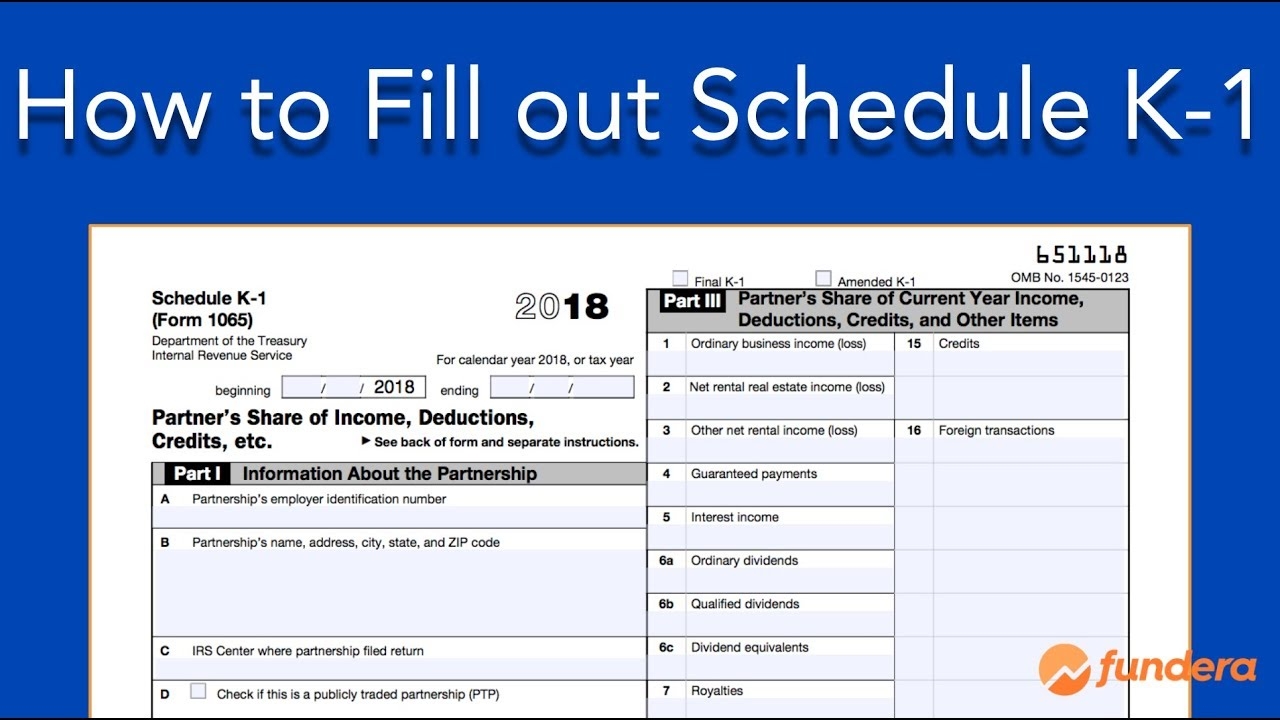
Irs Form K-1 Codes
Unraveling the Mysteries of IRS Form K-1 Codes
When you receive a Form K-1, it’s essential to review the codes provided and understand what each one means. Some common codes include A for ordinary business income, D for capital gains, and K for distributions. These codes help you categorize income correctly on your tax return.
If you’re unsure about any of the codes on your Form K-1, don’t hesitate to reach out to the issuing entity for clarification. It’s better to ask questions and seek guidance than to make mistakes that could lead to IRS scrutiny or penalties. Accuracy is key when dealing with tax matters.
By familiarizing yourself with IRS Form K-1 codes and their meanings, you can navigate tax season with confidence. Remember, accurate reporting ensures compliance with tax laws and may help you maximize deductions and credits. Stay informed, stay organized, and stay on top of your tax responsibilities.
Don’t let IRS Form K-1 codes overwhelm you. With a little knowledge and attention to detail, you can tackle tax season like a pro. Take the time to understand the codes, ask questions if needed, and file your taxes accurately. Your financial future will thank you!
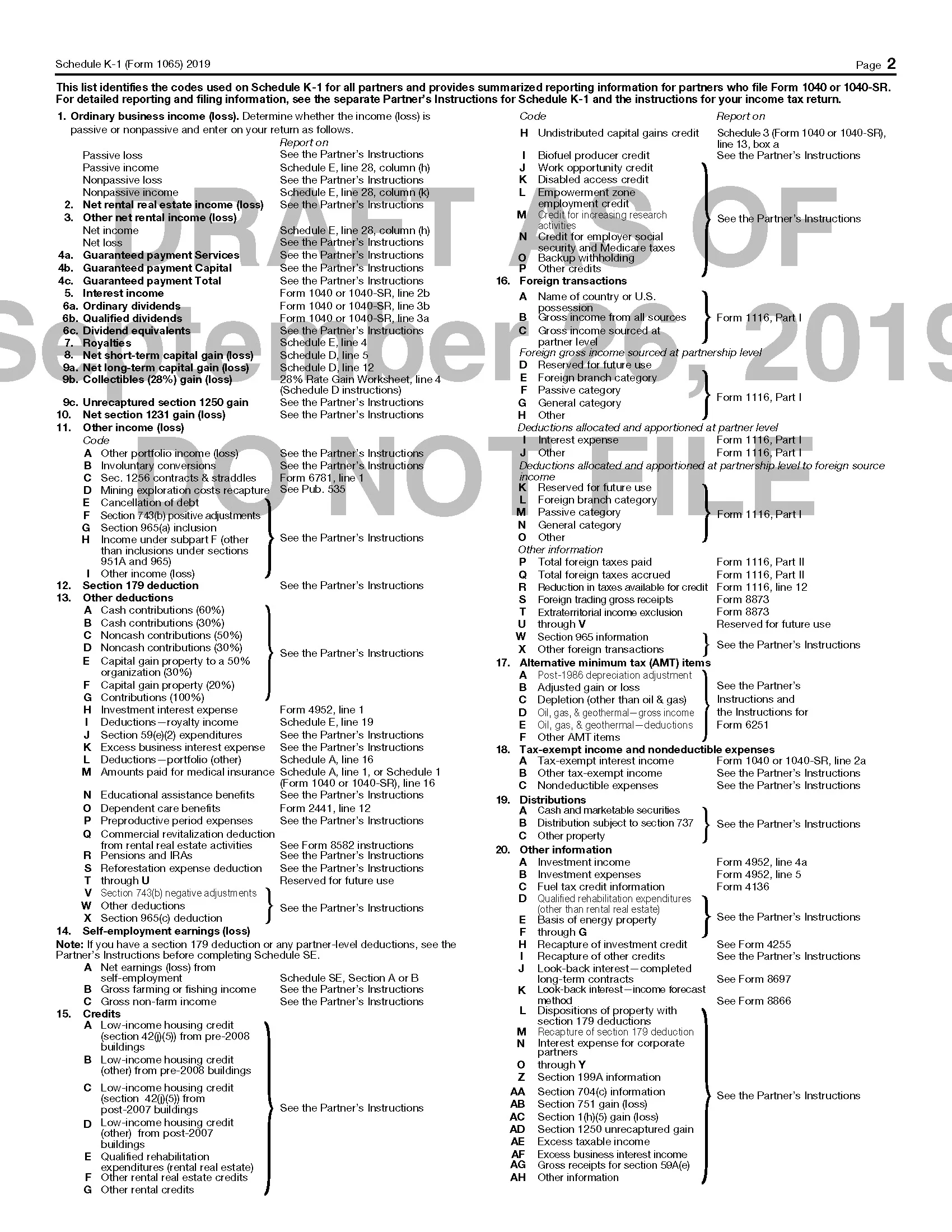
Drafts Of 2019 Forms 1065 And 1120S As Well As K 1s Issued By
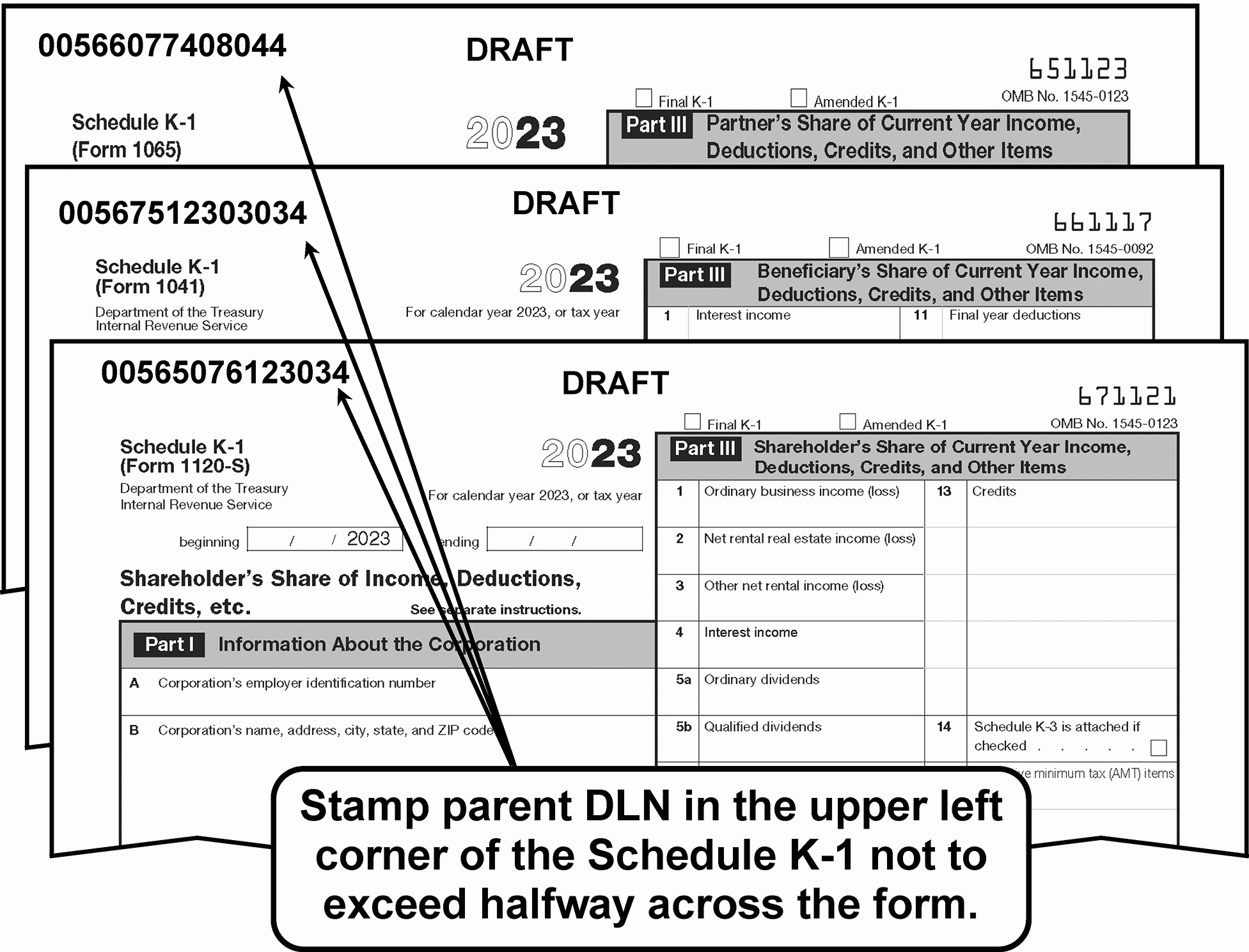
3 0 101 Schedule K 1 Processing Internal Revenue Service
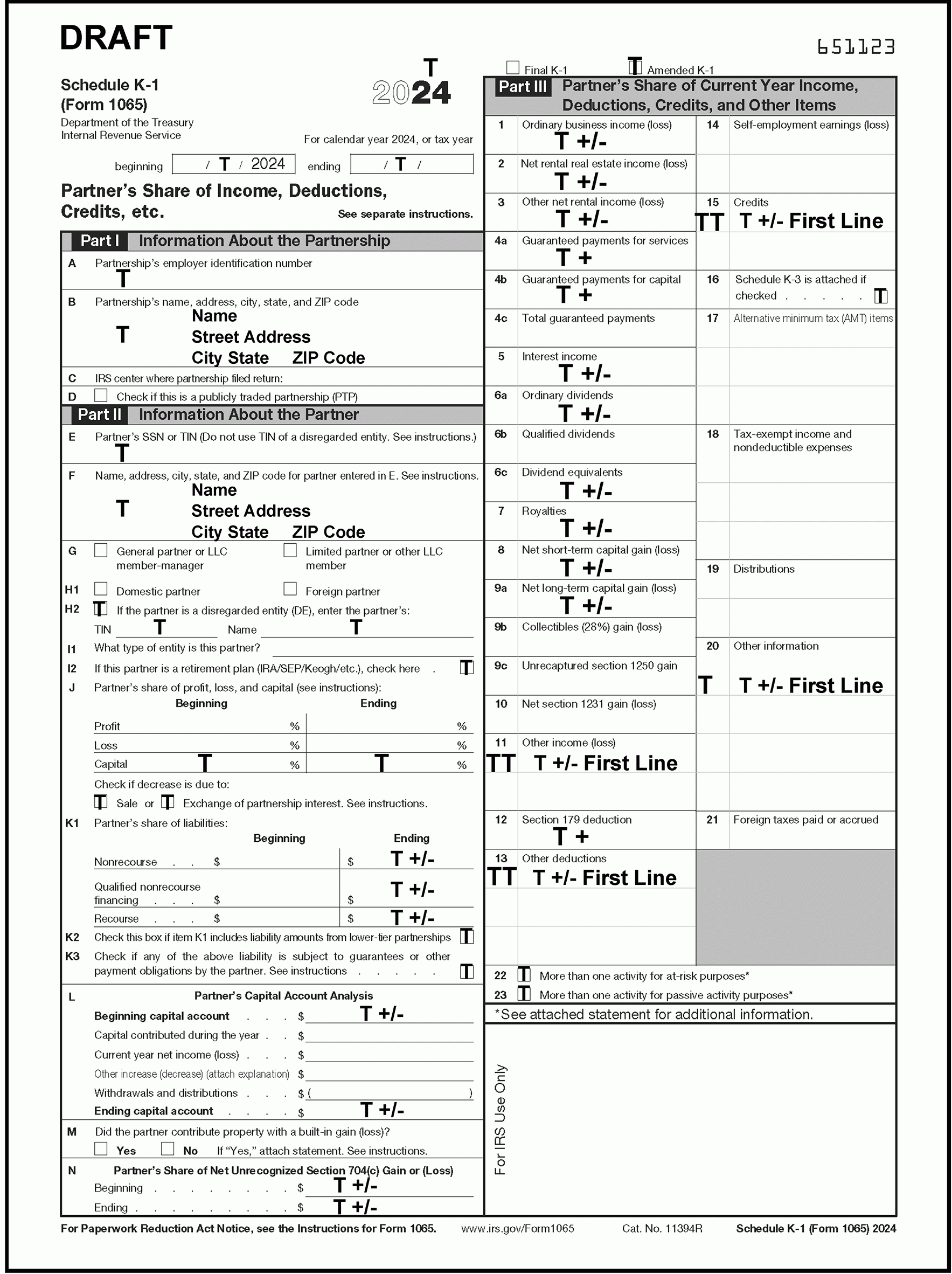
3 0 101 Schedule K 1 Processing Internal Revenue Service